Showing posts with label books. Show all posts

Sunday, January 28, 2018

Pan Kleks Illustrations, ranked worst to best

As generations of Polish children know, Pan Kleks runs a magical academy for boys whose names begin with the letter A. His school is on the edge of Storybook Land, and his pupils regularly cavort with talking dogs and robot boys. Created by Jan Brzechwa in a series of books over 50 years ago, Pan Kleks has been on movies and the stage, and his image has been brought to life by dozens of illustrators over the years. 

But who has best captured the essence of this mischievous scholar?

Let’s take a look.

The Anonymous

Uninspired knockoffs are a hazard of the publishing industry, and Pan Kleks is no exception. Poland is awash with various editions bearing uncredited, often amateurish artwork, most of which would drive any reasonable child to put the book quickly back on the shelf. Here are a few of the notable failures.

Anonymous One: Homeless Bird Afficionado


Sorry to make you look at this. 


Widely known as a light-hearted academic and scholar of great renown, Pan Kleks exists today as if Brzechwa had been channeling both Willy Wonka and Albus Dumbledore twenty years before either had been conceived. Unfortunately this edition features a lackluster effort that seems to be channeling the Johnny Depp’s ill-fated Wonka more than Brzechwa’s hero. Here, Kleks is a leering, world-weary pedant with a Dorothy Hamill helmet cut and a cut-rate parrot. No no no.

Anonymous Two: Rainbow-headed hippie.


Perhaps no illustration better emphasizes the danger of setting a story in an all-boy boarding school better than this one. As a parent, nothing would red-flag this school like a headmaster who is wearing an obviously fake beard. Why is Kleks’s mustache made of copper wire? Why does he look like a fifteen-year old? Yikes. The boy here is actually turning to flee, which is the proper decision.

Anonymous Three: Inappropriate Ingenue


I don’t know what this is, actually. It may in fact be the cover for a soundtrack to the one of the movie versions. Whatever the case, it seems strangely adult-oriented. Sultry Kleks in a tartan wrap, his head at an unnatural angle, perhaps inviting you in to hear the secrets of the cosmos in his one-man show?

No?

Anonymous Four: The Meth Lab Genius and his Young Apprentice


I don't really dislike this cover, but it's a solid meh here. Could be any mad scientist and his boy, really.

Anonymous Five: Tolkienesque Ennui


Whew! Now, I don’t like to take away points for creativity, but there is creativity, and then there is misguided innovation. This feels like a mid-seventies homage to Lord of the Rings, with Kleks as Gandalf to that redhead boy’s I’d-rather-be-having-second-breakfast Bilbo. But the worst sin is to have replaced joy and wonder with world-weary drudgery. Kleks looks disinterested, as if he’s about to wander off, and the boy is little more than a head on a bow-tie tether. I’ll give it credit for whimsy, though. Those expressions! (*me, whispering* Actually, to be honest, the more I look at this the more I like it.)

(*clearing throat*) Let’s move on to illustrators whose names I could find.

Jakob Kuzma


Finally someone knows Kleks should be fun! There is definitely a playful air to Kuzma’s take — the multicolored hair, the jaunty joker collar on the starling Matthew. The other-worldy cosmic vibe is strong, yet Kuzma stays true to Kleks’s iconic elements — the yellow waistcoat, rainbow hair, and strange mustache.

Agata Łukasza


Lukasza posits a strange theory of Kleks: that he is most intriguing in the abstract. Other than this one amazing hero-pose, most of her illustrations show Kleks as a shadowy grey outline, a curious choice given the colorful character she could have put on display.

The shadowy master in his cluttered secret room.


Marianna Sztyma

Kleks applying his trademark colored freckles.


Talented and clever, Sztyma takes an arthouse approach to Kleks. She allows her characters a rubbery anatomy, instilling her figures a loose-limbed joi d’vive. Her inclusion of random detritus in the margins is a direct callout to Szancer (see below). But Kleks again seems a bit young to be the holder of ancient mysteries; he feels a bit like that resident assistant who wants to be your best friend, not headmaster of his own academy.

The master receiving a fresh box of holes.

Mikolai Kamler

The classic ‘Kleks pouring rainbows for dinner while floating’ scene.

Now we are getting somewhere! Kamler brings a lot to the table. This feels most dedicated to the source: a long orange mustache, rainbow Einstein hair, a yellow waistcoat. Kamler’s Kleks is both clever-looking and fun, a spritely half-elf who finds it amusing to hang with the humans and dispense whatever wisdom he sees fit. Kudos to you, Kamler.

Adventure is out there!

Suren Vardanian


Vardanian brings a lightness and color to Kleks while still keeping a splotchy, anarchic line. Kleks’s hair is a savage rainbow, and his overall appearance is early Grateful Dead by way of Sgt. Pepper. Vardanian’s Kleks has also eliminated the mustache, which means there’s more room for an infectious, constant smile. The wardrobe update is a curious touch - Kleks is less an eccentric academic here, and more of demented majorette. A true original in the canon, Vardanian’s edition is a worthy runner-up to the original and still champion Kleks illustrator.

Top hat and spectacles… a true gentleman of magic knows how to accessorize.

Jan Marcin Szancer

Considered the alpha male of 20th century Polish illustrators, Szancer was the first to draw the infamous ‘Mr. Inkblot’ in the book’s original publication. In a happy convergence of 1950’s loose pen-and-ink mayhem with Brzechwa’s trippy kid-friendly prose, Szancer’s illustrations, like Tenniel’s Alice in Wonderland, are the gold standard to which all Kleks-icographers must aspire.

The unforgettable Teapot Train incident.

Strangely, Szancer seems to have ignored most of what those who came after regard as essential. Kleks’s hair is black, his mustache normal. His wardrobe isn’t as egregiously eccentric as many illustrations; he could be any well-appointed man about town (of the late 19th century, perhaps). And yet Szancer fills Kleks with a sense of play and whimsy that matches the tone of the book and helps create the mood of the story.

Overall Szancer displays in Pan Kleks what made him the premier Polish illustrator of his, or perhaps any, era. A loose, confident line, a distinctive color scheme, a dedication to detail bordering on obsessive clutter. Szancer knew that what kids want from a picture is stuff to look at, a composed portrait that leads the eye from detail to detail, picking out elements of scene that make up story.

I don’t know what’s happening here but damn I want this on my wall.

Epilog

Now, a confession. As to the matter of what happens in Pan Kleks, I’m not sure at all. I’ve watched parts of the movies (in Polish), but don’t know how faithful they are to the books. And since my Polish remains at the level of an intelligent Golden Retriever, and I have yet to find an English translation, it may be a while before I actually know what’s happening in these illustrations.

Updates will be provided as warranted by consumer demand, my own motivation, and the progression of my Polish skills.

Tuesday, September 16, 2014

Writer's Corner: a close look at The Deep-Blue Goodbye, by John D. MacDonald

An inexcusably pulpy cover
John D. MacDonald was a very successful crime writer from the 1950's through the 1980's. He's best known now for the Travis McGee series, which starred an observant, cynical houseboat beach-bum in Lauderdale, Florida. MacDonald also wrote more hard-boiled fiction such as the novel The Executioners, which was twice filmed under the title Cape Fear. But Travis McGee, the blue-collar James Bond who took on cases where he can recover money and take half as the fee, was his most enduring creation.

His first McGee novel, The Deep Blue Goodbye, appeared in 1964, and while it seemed to ride on the coattails of James Bond's runaway success, there's a lot more to it than that. Strange as it seems, the McGee books were part of a thriving culture known as 'books for men,' in an age when men - mainstream, actual men - read books. Books on war, books about cowboys, books about private detectives. Pulp writers like Zane Grey pumped out western after western, and war titles were also numerous. Somewhere along the line, (I'd say about 1980) men stopped reading, and mysteries almost died out with them, until Sue Grafton and Sara Paretzky came along with female leads to save the genre. But that's another post.

Approaching the McGee novel's from a writer's perspective, there's an awful lot to learn from the success of one of America's great mid-list genre authors. So let's tear into one specific passage, looking at its key strengths and weaknesses, to answer the one question every author needs to ask: Why should my reader keep turning the page?

This passage occurs on the second page, after McGee introduces that he's on his boat, The Busted Flush, and the location is Lauderdale, Florida.

Chookie McCall was choreographing some fool thing. She had come over because I had the privacy and enough room. She had shoved the furniture out of the way, set up a couple of mirrors from the master stateroom, and set up her rackety little metronome. She wore a faded old rust-red leotard, mended with black thread in a couple of places. She had her black hair tied into a scarf.  
She was working hard. She would go over a sequence time and time again, changing it a little each time, and when she was satisfied, she would hurry over to the table and make the proper notations on her clip board. 
Dancers work as hard as coal miners used to work. She stomped and huffed and contorted her splendid and perfectly proportioned body. In spite of the air conditioning, she had filled the lounge with a faint sharp-sweet odor of large overheated girl. She was a pleasant distraction. In the lounge lights there was a highlighted gleam of perspiration on the long round legs and arms.


There's nothing fancy here, it's just clean simple prose, a bunch of facts with only a few moments of inspired writing. But for a moment, let's just soak in that first sentence: Chookie McCall was choreographing some fool thing. Here are my reactions to that sentence:

1. What kind of name is that? It's great, a mix of hard consonants ending with a soft l; it speaks of a mind tuned to whimsy and seriousness in equal measure.

2. We know Chookie's a dancer, but not just any dancer, she's one who does choreography. In 1964, most men would be happy to date a dancer, but Trav has met a woman who goes one better - she 'writes' dance.

3. From 'some fool thing' we know all sorts of things. First, we know Trav doesn't know or appreciate much about dance. Second, we know that even if he doesn't care about dance, he cares enough about Chookie to let her do her job on his houseboat.

That's pretty cool, that he can pack all that information into one short sentence.

Overall this scene is a great indication of the compassion Trav feels for women. As it turns out, Trav and Chookie aren't sleeping together. As the book develops, Trav's feelings for women separate into a strange mishmash of 60's paternal chauvinist condescension with a fig leaf of equality-of-sexes neo-enlightenment. This little bit here on the boat, where Trav is both patron and companion is a great bit of foreshadowing.

The paragraph continues with a bunch of things they tell you not to do in writing school, namely start four consecutive sentences with the pronoun She. There's a lot of descriptive tour-guiding with one stellar phrase (rackety little metronome), and I'm willing to let MacDonald break a workshop 101 rule because he's given me enough confidence from the opening of the book and his 'some fool thing' line that I move along the bridge of description till we get to the payoff: 'Dancers work as hard as coal miners used to work.' Here we get a sense of Trav's appreciation for Chookie and her career even if he knows nothing about it. He's a guy with some insights. In other words, he's a voice worth listening to.

Then he spends a few sentences of pure 'male gaze,' reducing Chookie to her body and its smells and the pleasure he gets from them. It's really kind of piggy, and justified only because she's a dancer, and dancers are a reduction of body to art, but it's still a male privilege thing, which, while offensive, plays to MacDonald's audience. Which is another measure of MacDonald's talent. You can reduce McGee to sexist pig, or you can try to rationalize it by saying MacDonald created actual empowered women - and he does have a lot of strong female characters - but - and this is not a small point - you still trust McGee as a narrator. McGee is self-aware, confident, and reliable. This goes a long way in securing the trust of a reader.

You may think MacDonald wasn't smart enough to think through all these issues of gender and patrician attitudes, but later passages, where McGee thinks of himself as a modern knight errant, saving damsels and feeling guilty for bedding the women he saves, would prove you wrong. These are exactly the kinds of things writers think about, and when he was on, MacDonald was in tune with everything he was doing, and with his core audience.

And so, let's reduce everything to one rule: Find your audience, and give them a reason to keep turning the pages. Everything after that is gravy.


Monday, January 27, 2014

Tournament of Books 2014: my Pre-Tourny analysis

What is our obsession with competition in America about? There's scarcely an activity any more that doesn't have a governing body and associated national tournament. There are beard competitions, rock-paper-scissors tourneys, air-guitar battle royales. There's nothing you can do that someone else won't claim to do better and start a tournament to prove it. Even stacking cups has become a competitive sport. 

Which brings us, of course, to books. The shortlist has been announced for the 10th The Morning News Tournament of Books, my favorite of the single-elimination tournaments that spring up in March to capitalize and satirize the NCAA basketball tournament. Filled with capricious judges, aggrieved fans, authors who sometimes chime in to the comments section - you never know where the Rooster will take you. It's both a legitimate study of what makes a book good/better than another and a perfect example of why rating books against each other is a fruitless path which ends only in madness. Madness I tell you! 

To more accurately sum things up: The ToB is a single-elimination tournament with sixteen (well, okay, this year, seventeen) initial slots. Books are matched up against each other, and a celebrity judge reads both and decides which book they like better, and writes a summary article of their decision. That book advances to face the winner of the adjacent bracket, and so on, till there is uno champion del mundo! 

Winner gets a live Rooster, as the legends have it.

Without knowing the first-round matchups, and having read only four of the books (sad shamey-face) I can only give vague impressions on relative odds. 

First, it looks like the selectors have done more to get some diversity into the field this year. Last year's list, while full of wonderful books, was surprisingly beige. It's nice to see that every inhabited continent has contributed to this year's carnage. 

There were several notable snubs this year: George Saunders, Meg Wolitzer, Khaled Hosseini, and Rachel Kushner, for instance, all wrote fantastic books, but without expanding the field and taxing everyone's patience, these folk will just have to settle for massive sales and great critical acclaim to keep them warm at night.

Judges this year include and eclectic mix of authors, critics, a musician, and a guest chosen from the ranks of talented hangers-on and fankids. Among them are Young Adult hearthrob novelist (and last year's runner-up author) John Green, the amazingly funny and talented Roxane Gay, the legendary Geraldine Brooks. I'm expecting good things from all these people.

Overall, I think these are all good books and would love to read every page of them, but only one can survive.  I didn't link to anything because you're probably smart enough to highlight, right-click, and choose search on Google and also, I'm lazy.

* indicates books I've read

At Night We Walk in Circles by Daniel Alarcón - A relative unknown though critical darling, this looks at first glance like yet another dark South American farce, this one with a guerilla theater troupe, though to be fair, those are usually pretty good, and the people who like them really like them. I'm guessing there are weaker books in the field, but if matched up against a heavyweight it's a first-round adios.

The Luminaries by Eleanor Catton - One of the heavyweights, this book carries its Man Booker award pedigree and "Concept novel" gravitas into the ring. Like Roostarian winners Cloud Atlas and A Visit from the Goon Squad, concept novel isn't necessarily a bad thing. But one rap on The Luminaries is that it's a writer's book, not necessarily a mainstream reader's book, so which judge it gets will be critical. Gravitas gets it past the first round, then its a crapshoot. 

The Tuner of Silences by Mia Couto - This is another sleeper from Africa about an isolated tribe contacting the modern world. A wise and knowing insight into a foreign culture, this book will gain respect for being exotic, even if it may not have the pedigrees of other entrees. A true wild card, though probably not a contender.

The Signature of All Things by Elizabeth Gilbert - Will the author of Eat, Pray, Love be able to overcome her backlash and find redemption in the the Rooster tourney? By all accounts this is about as far from EPL as a book can get. On the minues side, it's also a doorstoppy idea book. Maybe it has enough punch for the semi-finals, but I doubt it.

How to Get Filthy Rich in Rising Asia by Mohsin Hamid - An old-school political book, a second-person novel about making money in Pakistan. Satires play well with some but not others, though with the right pairing, say against an acerbic domestic drama, Hamid could score a moderate run.

The Dinner by Herman Koch - A divisive book about European scandals and privilege that takes place over a dinner table in Amsterdam. Reviews were mixed, though marketing made it a sales success; The same way it hit bookstores with a storm of publicity then didn't sell or get decent reviews, Dinner will flame out of the the ToB in the first round when faced with more lively books. 

The Lowland by Jhumpa Lahiri - Another awards winner with the gravitas and popular appeal that will threaten to go deep. 

* Long Division by Kiese Laymon - A dark horse in a field of dark horses, this is another high-concept book about time travel, race, and viral YouTube meltdowns. I love the idea, and halfway through I'm finding it funny, endearing, baffling, and charming by turns. But in the ToB, high-concept only gets you so far; this feels like a first-round upset but not much further. 

* The Good Lord Bird by James McBride - Pulitzer Prize winner, a race-and history based romp, this is a strong contender for the final four. See my review on this site for more information.

Hill William by Scott McClanahan - Surprisingly, this has the highest Goodreads rating at 4.24, which bodes well (although it has only 369 readers; surely a wider readership would drop that total?).** This feels like the sleeper pick, much like The Sisters Brothers was a few years ago.  

The Son by Philipp Meyer - I read Meyer's debut novel, and if this is anything like that the density of his prose will render one judge comatose, booting him in the second round. 

* A Tale for the Time Being by Ruth Ozeki - I actually read this book! It's a great book with great themes and characters. Ozeki is a dark horse with a chance to win the whole thing. Unfortunately, the final chapter employs a deus ex hand-wavy metaphysical meta-narrative which may sink her in the round of four, due to some judges insistence on literal believability in all things fiction. 

Eleanor & Park by Rainbow Rowell - YA books are always a dark horse; they tend to hit hard emotionally but don't hold up on reflection, much like your own teenage years perhaps. Probably a first or second round exit, though it could return in the zombie round, as its Goodreads rating tops this field at 4.22. 

The Goldfinch by Donna Tartt - The perfect combination of literary gravitas and popular appeal, The Goldfinch rode a tidal surf of buzz to best-seller status and squee-ing fan-boys and girls. The Goldfinch is my pre-tournament favorite, as even if it's bounced, it will probably be a zombie pick. It's only drawback is that it's really long and people get turned off by long.

The People in the Trees by Hanya Yanagihara - I'm not sure how I feel about a book that features lost Micronesian tribes and magic turtle meat. Guess we'll find out. I feel this has very low odds of winning, but maybe there's more magic in that turtle meat than I think. 

[Winner of the Pre-Tournament Playoff Round]

Play-In:
For the past two years, the sixteenth spot has been fought over by a surplus of books. Last year three war novels fought their way through; this year I can't sense a theme, so I don't get it. It's two books by women authors, one a seasoned vet, the other a relative newcomer. 

* Life After Life by Kate Atkinson - Ambitious, funny, idea-packed, Life After Life is also a gimmick book, and some judges will be shut down by gimmicks. In a fair world, Life After Life would make a deep run. Although if it gets booted, it may just employ its own narrative trick and re-birth the whole bracket from the beginning until it does win. 

Woke Up Lonely by Fiona Maazel - The lowest rated book on Goodreads with a shockingly low 2.84, little is known of this upstart, who will face a stiff challenge from the compulsively readable Life after Life.

The Rooster crows in March!

Here's my compilation bookshelf on Goodreads.

** Goodreads ratings are a moving target. Two days later, Hill William had been added to 467 readers, and it's rating had dropped to 4.11. As of Jan 26, Eleanor and Park had the highest GoodReads rating at 4.22, and Hill William had dropped to third. 

Tuesday, January 14, 2014

Review: The Interestings, by Meg Wolitzer


Over on Goodreads, I welcomed another member to my coveted Five-Star club: Meg Wolitzer's The Interestings! Now, why did it enter such rare territory, you ask? Well, it's hard to say. Is it a solid five-star like Delillo's White Noise, a modern classic destined for doctoral theseses and scorn from the unwashed masses? Well, how many books are?

But The Interestings is five-star good in ways that count: It's readable and believable. It's a good solid read, by turns enchanting and engrossing, that rarest of literary feats: a page-turner about mundane things done by ordinary people. The six core Interestings all met at a summer camp in 1974, and they were all Talented in various ways: The actor, the dancer, the animator, the musician, playwright, and the enigmatic prodigal. Mostly they went on to do non-artistic work, although one, Ethan, went on to be a Success complete with money and fame.

In fact Ethan Figman went beyond ordinary in many ways: he's a multi-millionaire cartoon king, morally scrupulous, ethically above board - a liberal superman, even. Which is no doubt what turns a lot of people off about this book (see white privilege, etc.) and I get your point. But it also drives the narrative in a believable way; he's surrounded by the ordinary, and he elevates them. Maybe this sounds like a strange point, and maybe I'm talking The Interestings out of five-star status just by mentioning it, but Ethan is even a bit... Christ-like, isn't he? (yeah, my eyes are rolling too. I'm backing off...)

Overall I loved being in this book, finding out what happened next, following along. Jules, the primary narrator, may have been a bit harsh and needy and jealous, but she was real. And I found Jonah to be entirely sympathetic and engrossing; his sections could have been a novel by themselves. And despite a bit of tidy wrap-up involving astounding coincidences and Just The Right Words from Ethan to Jonah, followed by a noble tearful death, The Interestings was an amazing, astounding read. Welcome to the five-star lounge, The Interestings!

Thursday, December 19, 2013

Books of the Year: The Grebbies

Well here it is, Christmas time again. The ol' year end. Yup, there it went, and that means it's time to look back and give out some awards.

The Nobel Prize committee has had their say, the National Book Award is done. The Goodreads Books of the Year have been voted on and added to thousands of "To Read" lists, never to be thought of again. The Rooster and the Pulitzer Prize are but blips on the horizon. If you're jonesing for more book awards, you've come to the right place.

Allow me to present the First Annual Grebbie Awards, given to notable books by the staff at grebmaR.net. A more complete list of my notable reads is available on my Goodreads page, but these are my personal highlights.


Books of the Year that I didn't read

Let's face it, I didn't read that many books this year, and I had to skim a Lemony Snickett to hit my Goodreads target of 35 books. Which leaves a lot of books I meant to get to but didn't, including the second book on the Lemony Snickett series. But that doesn't mean I couldn't follow the buzz. And of all the buzz-worthy books, these are the ones I most regret not getting to.

MaddAddam, by Margaret Atwood 
This one looked great, but as the third book of a trilogy I never started, it's down on my list.

Tenth of December, by George Saunders 
Okay, here's reason #1037 why publishers don't like short story collections: I read some of these stories in Best American collections and/or The New Yorker, so it didn't make a lot of sense to lay out money for the rest of them. On the other hand, Saunders is an amazing talent, well worth your time. But if you're not already reading The New Yorker or the Best American series, you're probably not his target market. See what I mean?

The Good Lord Bird, by James McBride 
I always regret not reading the NBA winner, and this book, about a kid joining up with the John Brown raids, made this year no exception.


Literary Novel/Book of the Year:

The shortlist of Grebbie-nominated books I did read includes:

Life After Life, by Kate Atkinson 
Infinite rebirths, the Blitz of London, and murdering Hitler. What else do you need in a book?

We Live in Water, by Jess Walter 
A compassionate collection of stories about hard luck losers in the Pacific Northwest by one of the great writers of our time (and my Tin House workshop mentor - Hi, Jess!)

A Tale for the Time Being, by Ruth Ozeki
Japanese schoolgirls, ancient Buddhist nuns, diaries that float up on distant shores, and quantum-zen weirdness. Put on your thinking caps, folks, and read this one now.

But the Grebbie goes to...

The Flamethrowers, Rachel Kushner 
Looking over my list, there wasn't one head-and-shoulders standout. But this book, the story of a young artist known as Reno who in the late 1970's hangs on the outskirts of art collectives and anarchists, was probably my favorite book this year.

I love this book as a perfect blend of everything I'm into, novelistically: Historical labor movements, art, motorcycles, anarchic shadow organizations, sexuality and sexual politics, and yes, myth-making on a shamelessly grand scale.


Pulpy Good Fun retro-read of the year


The Dain Curse, by Dashiell Hammett
When eight diamonds go missing from an eccentric millionaire, it seems like a routine insurance investigation for the Continental Op, until the bodies start piling up and the man's niece - a drug addict, possibly insane - is at the center of the whole thing.

Dashiell Hammett wrote the hell out of mysteries, and his Continental Op is one of the great creations of noir mysteries. The Op is nameless, middle-aged, overweight, and without much in the way of history or emotion. What he does have is a bulldog's perseverence and about as much morality- he's always willing to play people against each other to solve the case. Which is different from pursuing justice, and he'd say the same thing if he were much of a philosopher.

Award for Comics that do what Comics should do:

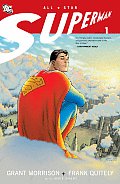
All-Star Superman, Volume 1
Sure, this title has its problems: A cardboard sex-doll Lois Lane, an overly stuffed smorgasboard of villains, and loose choppy plotting. But it also has some great moments: bio-engineered suicide bombers, multi-dimensional time travel, and Jimmy Olson as Doomsday.

Superman was always his most fun when he let loose of reality and just went with acid trip weirdness: Cities in bottles, flying superdogs, evil clones, Mr. Mxptlyk - everything I think isn't in the last movie (I haven't seen it, the trailer looked like a pretentious gloomy mess) is in here. Repeat after me, everyone: Superman should be fun!


Country of the year: Turkey

Well, I know what you're saying: Turkey is not a book. And you'd be right, Turkey is a country. But you'll notice on my Goodreads list a couple of books by Turkish authors, including Nobel prize winner Orhan Pamuk, the historical novelist Ayse Kulin, and a collection of Turkish Fairy tales.

That's because, dear reader, I live in Turkey. I haven't written much about it - I pretty much live on the Internet these days - but I hope to bring some of that to this blog in the future. Meanwhile: If you like sweeping historical romances, check out Ayse Kulin. If you like dense brooding exposes on melancholy and the nature of art, Orhan Pamuk is your guy. And, well, who doesn't like a fairy tale once in a while?

So step up to the podium, Turkey, and receive your Grebbie.

And what will 2014 bring? I can't wait to find out.

Tuesday, October 8, 2013

Weekly Round-up

I'm trying a new feature here to get myself re-interested in this blog. It's a weekly roundup of things I find interesting on the web. I'll try to keep it focused on books, stories, and publishing, though I may throw in the occasional movie trailer or cat video, just to drive my links up. Enjoy!

Stories:
Nobody's Stranger
Maud Newton has a story in two parts on medium.com. It's described as 'Miami noir love story.' It starts out like the kind of story that would be dismissed critically as a male fantasy of easy sex with a gorgeous woman if a man had written it. And parts seemed designed to act as a discussion starter of inverted gender roles in po-mo fiction rather than as an actual story. But some part of me really liked this story, and it stuck with me, so I'm going to say you should read it as well.

The Impossible Man
On another end of the gender spectrum, in the Paris Review, J Robert Lennon writes about a guy's guy, in trouble with his girlfriend, who takes a walk and loses his memory. When it comes back, he forgets all the parts of himself that weren't very nice. Things go downhill from there.

You Invent this Incredible Invention
From Pank magazine, an incredible story with a great voice that illustrates an amazing worldview. You could call it the tale of a geek and the woman who loves him, but it's more than that. Molly O'Brien, stand up and take a bow!

Books:
It's compilation season for the year's best short stories. The Best American Short Stories 2013 is out. After a brief glance, it looks like once again The New Yorker, Tin House, and Granta are still in charge of American short fiction. The O Henry Prize Stories collection is also out, and they do a slightly better job of looking beyond the big names but not much. For more obscure stories by lesser known but no less talented authors, The Pushcart Prize is your best bet.

Dumb movie trailer of the week:
The Desolation of Smaug: The Hobbit Part II (or, The Lord of the Rings -2)
This movie has it all. Dragons! Giant Dwarf-knuckle walkways! Suspenseful droning music! Hot he-dwarves. Hot she-elves! Untippable barrel racing with whitewater ninja-fights! Eyebrows of all shapes and sizes! Gold-pile luge racing! Me wants it, precious!


No, but seriously, I need to see the physics behind those barrels. And the eyebrows.


Cats!

Saturday, February 4, 2012

Novel review: Zone One, by Colson Whitehead

As someone just wrapping up his own zombie novella, I felt this one was just begging me to read it. So I did. Here you go:

Colson Whitehead's novel Zone One attempts a difficult move - writing a genre novel with 'literary' intentions. Leaving aside what 'literary' might mean, we're left with the question of whether a) the zombie plot is any good and b) what the book 'reads' like.

The good news is that the central idea of this book is outstanding- a plucky band of paramilitaries attempts to clear Manhattan for re-settlement after a zombie holocaust has brought civilization to a standstill. The central character is a non-special guy who goes by the nom de apocalypse Mark Spitz - a name that's left unexplained for about three-quarters of the book. If you're the type who can't wait three-quarters of a book to find out why the central character is named Mark Spitz, that's the first clue this book isn't for you.

Mark Spitz is, in his own words, a solid B student, who got through life on his special skill of being completely un-special, attracting minimal attention, and being very ordinary. This is his survival skill, in fact, a tongue-in-cheek attempt to explain why when the zombie hordes inevitably converge on whatever hiding space he's in, he will slip away, un-noticed. If that's the type of humor that's for you, then you'll love this book.

As these examples show, Whitehead's execution is a bit off-setting. It may be its off-settingness which leads this to be labeled a 'literary' book. There are endless digressions into family history, a cyclical plot, flashes back and forwards in time, all of which is drenched in dense, artsy prose that is often a bit more than is called for. But, in his defense, this is a novel about zombie apocalypse, a topic where you have to come big or go home.

Whitehead has definitely read Pynchon and David Foster Wallace, and his social commentary runs towards the concept that America, and by extension the after-apocalypse cabal that runs the reconstruction, is under the control of jingo-heavy spin-masters more interested in PR than in actually fixing real problems. Just like modern America, in other words. It's a nearly shopworn conceit done better by others, one that a zombie scenario neither really enhances nor expands upon, though it leads to a final scene that is as zombie-tastic as any zombie climax you can think of.

Don't get me wrong - Zone One is a fun romp, and compulsively page-turnable, though part of the page-turning spree may be due to your glossing over the repetitive digressions and nearly-the-same flashbacks of previous 'safe' houses that continually interrupt the real plot. It's a book that could easily lose a few pounds. Whitehead has a real wit and a strong power of observation not common in contemporary novels, zombie or otherwise. But overall, this is a read for slumming snoots or zombie fan-boys with aspirations of snoot-hood, and the purple prose and endless digressions can make it a slow slog for many readers.

Sunday, January 29, 2012

The MZD: a novel of undead horror

So my latest project is a bit of a diversion from my usual navel-gazing, 'literary' (pretentious?) type writing. I've gone genre, mixing my formerly mild obsession with zombies and my current job of teaching English in Korea. This means (can you guess?) I've written a novella of zombie horror, set in South Korea.

It's called The MZD, and it's pretty much done - just a little tweaking, then a conversion to ePub format, then it's ready for you, my adoring reader. So. I can sense the questions mounting. Here, then, is a pre-emptive FAQ:

Q: A zombie book?
A: Yup. zombies.

Q: Aren't there like, hundreds of zombie novels out there already?
A: I'd say there are actually thousands. The market's pretty saturated with them right now.

Q: Is that a problem?
A: We'll see.

Q: Okay, so, I'm a zombie fan, myself. But I'm pretty discriminating. Are they fast zombies or slow? Is it a virus or space dust that turns people into zombies? Is is a post-apocalyptic wasteland of cannibals and madmen? Are there gratuitous kills and bloody mayhem?
A: It's not post-apocalypse, but it's about the outbreak itself, and people in the early stages of dealing with society falling apart. The zombies themselves are pretty traditional, except for the means of re-animation - that's where it's a little different. I won't say any more - part of the fun is reading it and seeing where it diverges from other z-lit out there.

Q: What format will it be released in? How do I get it?
A: It will be an eBook available on Amazon for sure, and probably bn.com, and other outlets like Smashwords. I will also make it available as a simple pdf for people who don't have e-readers as well. Since it's relatively short (about 40,000 words/100 pages), it'll probably cost around 3 bucks.

Q: When can I get my copy?
A: By mid February, 2012.

Q: Any excerpts? A synopsis?
A: Coming soon. Be patient.

Q: What's your next project? Teenage vampires?
A: Sure, why not? But they'll be real vampires, ugly, and disgusting, with zits and bad taste in music.

Q: Are you worried that this work compromises the value of your more literary work?
A: I don't understand the question. Do you want to buy a zombie book or not?

Q: Where else can I follow your progress?
A: The MZD has a facebook page here. Go and enjoy. There are reviews of other zombie works, updates on future projects, etc. Plus, I tweet.

That's all for now. 

Post more questions in the comments below, and I'll get to them when I can.

Thursday, March 17, 2011

Tournament of Books First round Summary

Link: The Morning News Tournament of Books.

Well, I came out of round one with a respectable six of eight correct picks. Here are the matchups in round two, starting next week:

Freedom, by Jonathan Franzen, v. Room, by Emma Donoghue
Matt Dellinger, judge
Matt Dellinger is the author of a book about America's national transportation infrastructure; his links to contemporary fiction are not quite clear to me. I'm interested if my knee-jerk stereotype of him as a clear-headed rational thinker will bias him towards Franzen's realistic novel of society and manners, and against Donoghue's parlor-creepiness. Another part of me thinks that Room's reportedly week second half will doom it against the furious and constantly unrelenting onslaught of Franzen's literary chops, regardless of the judge. You're good, Room, but Freedom has gravitas. Winner: Freedom

The Finkler Question, by Howard Jacobson v. A Visit from the Goon Squad, by Jennifer Egan
Elif Bautman, judge
Ms. Bautman wrote a book about Russian Literature; she lives in Istanbul, where she reports for the New Yorker. Her international background makes this matchup hard to call. My instincts put Goon Squad, with its compassion for character, originality of ideas and complexity of execution in a far higher league than Finkler. Finkler was okay, but tended toward caricature, and rarely gave insights into its theme - Jewish Identity - instead re-hashing debates that have been going on for centuries. My head says Goon Squad in a walk, but this could be the upset of the round. Winner: Goon Squad

Nox, by Ann Carson v. Next, by James Hynes
John Williams, Judge
Nox beat Lords of Misrule in the first round; this upset people who saw it more as an artifact than a narrative, though its emotional impact is great enough for the right reader that it can upset any book in its path. Next, which I read last week, I found to be of enormous emotional impact at the time, but that impact is fading a bit, although from a novelist's standpoint, its structure and themes are close to perfect. The judge is an old-school book blogger from The Second Pass, so I sense him wishing to restore order to this bracket, and Next's old-fashioned goodness is the perfect book to do that. Winner: Next

Model Home, by Eric Puchner v. The Particular Sadness of Lemon Cake, by Aimee Bender
Kate Ortega, judge
Model Home was the other upset winner of this bracket, powering past the heavily favored (and apparently over-rated) Gary Shteyngart. Aimee Bender squeaked out a victory in a tepid first-round matchup. Both are gimmicky, white-bread melodramas set in SoCal suburbs, and the judge is an editor for the Wall Street Journal. I have no idea how this one will turn out, but my judge-meter says Ortega will take Bender's food-tasting as gateway to adult emotional relationship trick to her heart more than she will than the shenanigans of a bunch of hard-luck west-coasters in Reagan's 80's. Winner: Lemon Cake.

Tuesday, March 8, 2011

Tournament of Books: Matchup Eight

Okay, home stretch. This is the final matchup of the Morning News Tournament of Books. As of this writing, they've already started judging, and I'm one-for-one. Go me!


Bloodroot by Amy Greene vs. The Particular Sadness of Lemon Cake, by Aimee Bender

Judge: Catherine George

Bloodroot
I've always been leery of the new Southern Gothic, where hill-country characters go on and on about the quirks of their ancestors. Throw in country backwoods mythology, and I'm completely lost. I read the sample on Amazon, in which five characters were introduced in the first paragraph; two pages later the narrator changed to a kid with a horse. It was a nice little slice of melancholy southern gothic, it may have been wonderful but I'm not a fan of it.

The Particular Sadness of Lemon Cake, by Aimee Bender
This is a classic gimmick book: an adolescent girl gains the gift of 'tasting' emotions in food cooked by other people. Reviews are good, and Aimee Bender is a quirky but very talented writer. The gimmick is okay, and either a perfect symbol of the burdens of female bonding and adulthood, or a cheap trick that wears thin after one hundred pages. You, intrepid reader, get to decide.

Judge Catherine George was picked via a contest from among The Morning News's regular readers to judge the first round of the Tournament. She is a lawyer and aspiring novelist from British Columbia.

Summary: This is a round where I am definitely not the target audience for either book. Of these two, I am more interested in Aimee Bender. The judge's Canadian background lends me to think she'll be drawn to Bloodroot as an entomologist is drawn to a newly discovered millipede. However, Bender is a Big Name, meaning she can produce the big payoff on demand. This is a toss-up, and in a toss-up, go with sales figures.

Winner: The Peculiar Sadness of Lemon Cake. Mmm... Lemon Cake.

Tournament of Books: Matchup Seven

Even as the judging begins, I'm posting my matchup summaries. But here it is: Matchup Seven in the Morning News Tournament of Books. Almost there...

The matchup:
Super Sad True Love Story, by Gary Shteyngart vs. Model Home, by Erich Puchner


Super Sad True Love Story
I read a chapter of this in The New Yorker, where it masqueraded as a short story. I loved the concept: a love story set in a dystopic, decaying future New York, where technology's assault on individuality is in its final stages, and Homeland Security's assault on individual liberties is nearing completion. Everyone in the book accepts and revels in the status quo except, seemingly, the main character, who is mocked by his new girlfriend for his adherence of anachronisms like printed media.

Model Home
Reviews mark this as a cross between Freedom and Weeds, a loss of innocence set in Southern California's sun-drenched banal 1980's, well before the events of Super Sad. It's probably pretty good, though the central plot - a family on hard times is forced to occupy a model  home in a development - is lifted directly from the beloved sitcom Arrested Development.

Judge: Matthew Baldwin is a co-founder/editor at the Morning News.

Summary:
In a field with two other strong domestic dramas, and up against the powerhouse prose and bombastic vision of Shteyngart's prodigious talents, Model Home looks like an easy first-round knock-off. But, as I've said before, you never know.

Winner: Super Sad True Love Story

Monday, March 7, 2011

Tournament of Books: Matchup Six

Round Six is another matchup of novels with like-minded themes in the Morning News Tournament of Books. Please, no wagering.

Next, by James Hynes v. So Much for That, by Lionel Shriver

Judge: Jessica Francis Kane

Next
This novel seems themed around late adolescent white-boy angst; Kevin Quinn is fed up with his life and wants a change. He flies to Austin Texas for a clandestine job interview, and over the next eight hours has a series of reminiscences, a new romance, and brushes with modern homeland security. Reviewers have commented on Quinn's obsession with cultural minutiae, and the late twist may elevate this novel from the domestic drama it appears to be at first.

So Much for That
Shep Knacker is ready for retirement to an idyllic third world retreat; when his wife gets sick, he's forced into a decision: stay with her or abandon her to stick with the plan of an island safe haven. There are a lot of developments involving America's Health care system, and Shep's need to stay with his wife and in America feels like this is another domestic mid-life crisis novel, albiet with higher stakes.

The judge, Jessica Francis Kane, is a young novelist in her own right; her second novel, The Report, was shortlisted for several prizes.

Summary
A matchup of equals here; two white men in typically white, middle-class conflicts. Whereas So Much for That tackles larger social issues, Next feels more intimate, and perhaps more relevant. Both smack of privileged, middle-class whininess. I know health care is a bigger issue than a young man wanting a new life, but I'm more intrigued to read Next. I'm thinking the judge likes big social issues, so I think that's where she's going.

Winner: So Much for That. A gut feeling.

Sunday, March 6, 2011

Tournament of Books: Matchup Five

Standard disclaimers apply in this, the fifth matchup in the Morning News Tournament of Books. My picks are not to be used for wagering purposes.

The Matchup:
Nox, by Ann Carson v. Lord of Misrule by Jaimy Gordon

The Judge: Andrew Womack

Challenger One: Nox
Nox is not really a novel in the traditional sense; it's more of a collage of poems and mementos in a long, fold-out accordion style binder. Carson put this poem/elegy together after the death of her brother, so her accumulation of objects and memories builds to a strong emotional impact. Will that be enough for it to get past the first round?

Challnger Two: Lord of Misrule
This horse racing story was a long shot to win the National Book Award, but nevertheless came away with the roses. It's about a lower-tier racetrack in the near South in the early '70's, a time now ensconced in a patina of the otherworldly primitivism. The world of horse racing, with its hard-luck occupants and seedy reputation provides great material, and most likely this book is written well enough to make it a strong competitor in a strong field.

Judge: Andrew Womack is a founding editor of The Morning News, sponsor of the tournament.

Summary: This oddball matchup of long-shots looks like an easy win for the traditional Lord of Misrule, though one can't account for Womack's tastes. If he's responsible for Nox's inclusion, there's a good chance it can sneak by Lord of Misrule, but most likely Nox is here as a gesture to all the under-published works of genius that can't compete with the deep-pockets of Big Publishing.

My ill-informed pick: The Lord of Misrule

Saturday, March 5, 2011

Tournament of Books: Matchup Four

Matchup Four is the best of the first round in the Morning News Tournament of Books; the winner here could have the strength to go all the way. I think. 
A Visit From the Goon Squad, by Jennifer Egan v.  Skippy Dies, by Paul Murray
Judge: Anthony Doerr
Challenger One: A Visit From the Goon SquadJennifer Egan's book, which I've actually read, thank you very much, is a sprawling epic (but short) that spans decades, continents, and lifestyles. It's written as a collection of tightly linked short stories with recurring characters and themes. One of them, Sasha, is a young idealistic girl who gets caught up in rock music, drugs, and the music industry. Egan's imagination is formidable, and her ideas complex and well executed; if I hadn't read this book I'd dismiss it as rock-opera lite, but don't - it's an excellent book despite its one almost-too-much gimmick, which is a chapter told entirely in PowerPoint slides. 
Challenger Two: Skippy DiesPaul Murray's book, on the other hand, is Irish; a boisterous tale of schoolboys, one of whom, Skippy, dies in the first chapter. Throughout the next 660 pages, it wanders through levels of middleschooldom I don't want to remember, dabbling along the way with quantum physics, video games, pornography, and Irish folklore. All in all, this could everything anyone has ever wanted in a novel.
The Judge: Anthony Doerr is the winner of the 2010 Story award for his collection of stories, The Memory Wall. As a rising young lion of the literary world, Mr. Doerr will no doubt want to impress us with his tight readings and keen insights; I think his tooth for literary meat will be satisfied in both of these novels.
Summary: I pity this matchup - both of these have the chops and the fans to go all the way; it's a pity they got clustered together when the other bracket is filled with relative lightweights. *sigh*. Both were nominated for the National Book Critics Circle Award, garnered huge sales and have legions of adoring fans. (In literary circles, a legion is about fifty people. But still.) Egan's book was bold, grabbed for the brass ring and mostly got it; Murray's book sounds good as well, and if he executes as well as Egan, this is a tough draw for one of these books. I don't know, it sounds like a toss-up, though the loser will likely crop up in the zombie round.
Winner: Jennifer Egan, only because I read her book.  


Tournament of Books: Matchup Three

The third matchup of the Morning News Tournament of Books features a book I'm currently reading: The Finkler Question. Will this make me any more qualified to judge the outcome? Read to find out...

Savages, by Don Winslow vs The Finkler Question, by Howard Jacobson

Judge: Rosencrans Baldwin

Combatant One: Savages, by Don Winslow
This novel follows two small-time marijuana dealers in L.A., who try to stand up to a Mexican cartel that wants to take over their operation. When their mutual girlfriend Ophelia is kidnapped, they spring a plan to rescue her. Winslow is an Edgar award winning author; the prose I sampled is confident and quirky, with a staccato rhythm and a wry, subtle wit. But is that enough to get out of round one?

Combatant Two: The Finkler Question, by Howard Jacobson
I'm currently reading the Finkler Question, which won the Booker Prize, which is the most prestigious literary award of the United Kingdom. As you might expect of the Booker Prize winner, it's a bit of a chore, and couldn't be more different than Savages. The plot is about a sad-sack man who starts to think he should be Jewish, and the comedic romp that follows. Jaconbson's prose seems engineered to produce a chuckle every few lines, whether what's happening on the page is funny or not. This can get quite annoying if you're not into it. I think in general Jacobson labors a bit hard to produce laughs when he should be moving an actual plot along, though he's pretty respected and has a large, dedicated following, and his themes of Jewish identity can't be ignored or dismissed lightly.

Judge Rosencrans Baldwin is one of the founders of The Morning News, sponsor of the Tournament of Books. His own novel, You Lost me There, is a study in memory and loss, and was called "the perfect sophisticated summer read." I don't have any idea what kind of books he likes, but he's answered my emails in the past so I get the idea he's a nice guy overall.

Summary: These are two quite different books, in quite different voices, on completely different themes. Both writers are mature and confident in their voices. The Finkler Question deals with Jewish Identity, Savages with the underbelly of the American war on Drugs, two of the larger themes in literature and culture. Both novels have received mixed reviews on Amazon.

I think if I were on a bus with a stranger who doesn't read a lot of books, I'd recommend Savages over the Finkler Question, because it's probably just more fun. But in the end, Jacobson's choice of theme, density of prose, and seriousness of intent will lift it over the lighter, more genre oriented Savages.

Winner: The Finkler Question.

Friday, March 4, 2011

Tournament of Books: My uninformed opinion on Matchup Two

Okay, here's an admission: I am not qualified to make a judgment on this round of the Morning News Tournament of Books. I haven't read either book in this matchup, and all I know of the judge is fifteen minutes of a movie adapted from her book. But I believe in the Tournament of Books and, in the spirit of the Internet, I intend to continue offering my half-informed opinion, in the hopes you find them amusing.

Round One, Matchup Two

Judging date: March 8.

Room, by Emma Donoghue, v. Bad Marie, by Marcy Dermansky

Judge: Jennifer Weiner.


Room, by Emma Donoghue
Okay, so, writing a novel in the voice of a five-year old is both cute and dangerous. And writing a novel about a woman trapped in a underground backyard bunker by a psychopath who rapes her nightly for seven years, and who fathered the child/narrator of the book is ... a bold choice. And writing both of them together is Room. I don't really feel like reading books based on horrific crimes, though the reviews agree that the boy-narrator keeps things light and innocent - and wouldn't you have to? Wouldn't you just have to slather on the sweetness and light to have any chance of being read? And does that mean Donoghue actually made some sugar-coating cheats when she wrote this book? I don't know - there are so many pitfalls in this book, if I read it I know I'll find at least five and quit in disgust. It reminds me of The Lovely Bones, in a way - a book I despised for its insipid sentimentality and horrendous prose. Reviews of Room have been stunningly good, however - The Boston Globe called it a modern classic, so Donoghue has touched a nerve, and found readers, so there's probably something here worth your time.

Bad Marie, by Marcy Dermansky
This is another high-concept book built around distasteful themes by an edgy young female author. Bad Marie is 30, and just released from prison. She drinks too much, which doesn't stop her from getting a job as a nanny (really!). She meets and has an adulterous affair with the author of her favorite book, moves to Paris, and has several other adventures. Publisher's Weekly gave this a tepid review, saying it relies too much on contrived coincidence to drive the plot, and that Marie's character is never fully developed. Reviewers on Amazon suggest its a good, fanciful romp that can be churned through in a couple hours. I read the first few pages on Amazon, and it seemed harmless, though Marie was less than admirable - drunk on the job as a nanny, emotionless since the death of her boyfriend; and soon to be on the lam with 2 and a half year old. One reviewer called this chick-noir. Good enough for me to stay away.

The Judge: Jennifer Weiner is one of the queens of Chick Lit. Her first book, Good in Bed, made splashes for starring an overweight woman (I know. What a culture.); her second, In Her Shoes, made news when the movie version starred Cameron Diaz. Last summer, she started a fuss when Jonathan Franzen made the cover of Time; Weiner accused the publishing industry of ignoring women, a debate that found further frenzy when VIDA published some stats that prove it. I don't know how putting her in charge of judging these two books will turn out, but her pick could be a fun read for many many reasons.

Summary: On first glance, these seem like odd books for a chick lit author to judge. On the other hand, they both have strong female characters, both would seem to an uninformed observer to implicitly condemn male authority, and are ultimately targeted to female readers. My guess is that Weiner, being a popular writer, will ultimately choose the book more in line with popular taste (i.e., the one that's sold more copies). I could be horribly, horribly wrong on all of this. That's what makes it fun!

My uninformed call: Room, by Emma Donoghue

Wednesday, March 2, 2011

Tournament of Books: my uninformed opinion on matchup one

How many Tournament of Books entries have I read? One! Does that make me qualified to make my own picks? Of course. What's the internet for if not to spread half-assed opinions on things you're not qualified to judge?

Round One, Matchup One

Judging begins March 7.

Freedom, by Jonathan Franzen, v. Kapitoil, by Teddy Wayne

Judge: Sarah Manguso.

The parties involved:
Jonathan Franzen: Literary heavyweight, Time Magazine coverboy, liberal intellectual with funky glasses who was best friends with literary martyr David Foster Wallace, Franzen is the 800 pound gorilla of American literary fiction. This is to the detriment of American fiction, in my opinion, as there are plenty of writers with Franzen’s guts and chops, and plenty of writers whose work shows more respect and compassion for the human condition. Franzen can write a good sentence, and weave the personal into the historical like few writers of this era, but he works just as hard to make you hate his characters. I found The Corrections to be a beautiful achievement, but it was filled with just as many needless stunts as it was transcendent moments. What I’ve read of Freedom, with its condescending attitude to aging liberals, and one excerpt of a man digging through his own shit to find a wedding ring he swallowed, seems to be more of the same.

Teddy Wayne: Kapitoil is the debut novel of magazine writer Teddy Wayne. From its summary on Amazon, I can tell the ideas he works from are close to Franzen’s. A young Qatari citizen moves to New York in 1999, and writes a computer program that can predict oil futures, unsettling the industry and the world. There is romance, politics, and the specter of 9-11. From the sample, also on Amazon, I can tell that Wayne’s prose is precise and readable, and that he should be a good matchup for Franzen in round one.

Judge Sarah Manguso is the author of a memoir, some poems, and several novels; how she became the judge of these two novels I don’t know, but I’m going to sense that she’s got some resistance to Franzen, since the women in his novels don’t fare very well - there’s always a whiff of anger when Franzen writes about women, and I think that’s going to play against him in round one.

Summary: The first round of the TOB is carefully structured to pit like books and authors against each other. Also noteable is that every bracket but one pits like-gendered opponents against each other. I don’t know if this is a conscious effort to achieve gender parity through at least round two, or if it is a side-effect of pairing up like-themed novels. This pair up is a duel of ‘dense social novels,’ and, as such, I can’t see anyone stacking up against Jonathan Franzen - it’s hard for me to see Wayne out-plotting, or flat-out writing better than Franzen. But there’s the issue of character and likeability - from the first page of Wayne’s novel, I liked his narrator, kind of an earnest sad-sack I wanted to win.

Winner: My uninformed guess is that Franzen pulls out a win in round one, but it’s going to be a closer call than you’d think at first glance.